


Apple Music VP Oliver Schusser on Streaming’s Future and Global Growth

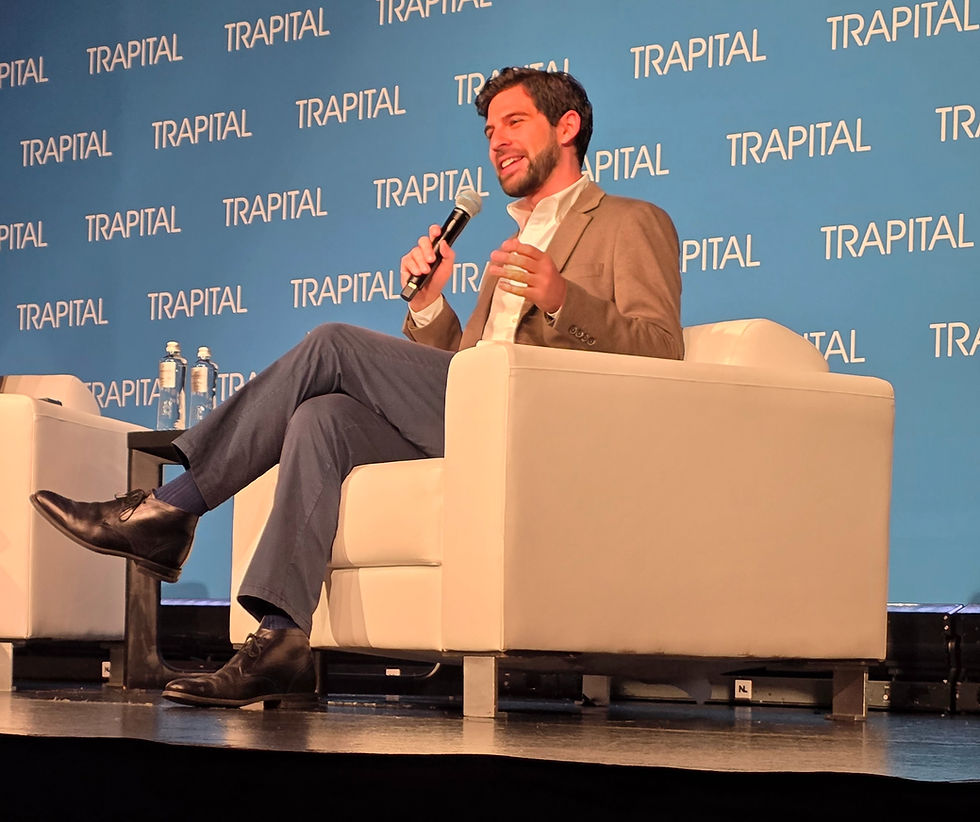
Oliver Schusser, the Vice President of Apple Music and International Content, brought both insight and perspective to the Trapital Summit stage. With years of experience in streaming and digital music, including a pivotal role at Napster before joining Apple, Schusser spoke about the evolution of the industry and the future of international markets. His talk wove together his personal journey, the lessons he learned from early disruptions in music, and his approach to guiding one of the world’s most influential streaming platforms today. The mix of historical insight and forward thinking gave attendees a roadmap for what is coming next in streaming.
From Napster to Apple Music
Schusser opened by reflecting on his early career at Napster, one of the first platforms to force the industry to reckon with digital distribution. He acknowledged that those early years taught him both the potential and the pitfalls of technology in music. "I was part of the team at Napster when people were still figuring out what digital meant," he said. "It was clear very early that the old system wasn’t going to survive." That experience, he noted, continues to shape how he thinks about innovation and the responsibility platforms have to artists.
Transitioning from Napster to Apple, Schusser said he carried those lessons with him into a more established environment. At Apple, the challenge was not simply proving that streaming could exist but refining it into a business model that sustains both artists and the platform. "Apple Music was never about being first. It was about being best for the artists and the listeners," he said. He described the company’s strategy as one rooted in long term relationships and trust rather than quick wins.
He also touched on how his Napster days prepared him for the skepticism Apple faced when it entered streaming later than competitors. "People said the same things to us at Napster that they said to me at Apple when we launched," he recalled. "They asked if the market really needed another player. And both times, the answer was yes, because artists and fans deserved a better experience." His ability to connect past disruptions to present challenges resonated with the room.
Global Growth and Local Culture
Schusser emphasized that the future of streaming will not be defined only by the United States or Europe but by growth in international markets. "Some of the most exciting music in the world is being made in Nigeria, Brazil, and India," he said. He explained that Apple Music has been focused on building infrastructure and partnerships in those regions, ensuring that local culture is not just exported but celebrated. "You can’t go into a market and impose a global playlist. You have to let local culture lead," he said.
He described how Apple is investing in editorial teams on the ground to better understand each region’s musical DNA. By doing so, the company aims to amplify voices that might otherwise be overlooked. "We want to build platforms that reflect what people are already doing, not just what Silicon Valley thinks is cool," Schusser said. He gave examples of regional collaborations that have already driven massive streams and cultural moments. The message was clear: international content is central to Apple Music’s growth strategy.
Schusser also stressed the importance of artist development in these markets. "It’s not enough to launch in a country. You have to invest in the artists from that country," he said. By providing tools, marketing, and data, he argued, platforms can help local artists build careers that reach beyond their borders. That investment, he noted, pays off for both the artists and the platform.
Balancing Tech and Human Touch
In an era where algorithms dominate discovery, Schusser pushed back against the idea that technology alone can serve artists or fans. "Curation matters. Human touch matters," he said. While Apple Music uses data and machine learning, Schusser emphasized that the company prioritizes editorial voices. "An algorithm can tell you what people are listening to, but it can’t tell you why it matters," he said. This philosophy, he argued, is what separates Apple Music from competitors.
He also explained that building trust with artists requires more than just metrics. "Artists don’t care about streams as numbers. They care about connection," Schusser said. He described Apple’s approach as one that respects artistry and storytelling, not just scale. "We don’t just want to be the biggest. We want to be the most meaningful," he said. That alignment between technology and human insight was a theme he returned to throughout his talk.
At the same time, Schusser acknowledged that scale does matter. He discussed how Apple Music’s reach allows it to invest in projects that smaller platforms cannot. But he insisted that scale should not erase individuality. "If every playlist looks the same, then we’ve failed," he said. His vision is for a platform that uses technology to empower, not flatten, diversity.
Looking Ahead
As the conversation turned to the future, Schusser pointed to the next generation of listeners and creators as the driving force. "Gen Z has no memory of buying CDs. For them, streaming is the default," he said. That shift, he argued, means platforms must constantly evolve to meet expectations. He also highlighted the role of video, social features, and live experiences in shaping the next phase of streaming. "Music is not just audio anymore. It’s video, it’s community, it’s global," he said.
Reflecting on his journey from Napster to Apple, Schusser said the constant has been a belief in the power of music to connect people. "At Napster, we broke things. At Apple, we build things. But the mission has always been about connection," he said. His remarks underscored that the future of streaming will not just be about technology or business models but about honoring the cultural force of music itself.


Comments